

Dog Coughing: Causes and How to Help Your Pet
Dog coughing is a reflex that forcefully expels air from the lungs and airways and while it’s something every dog does occasionally, it becomes a concern when it’s frequent, persistent, or paired with other symptoms. From common culprits like kennel cough to more serious conditions affecting the heart and lungs, the causes vary widely and so does the urgency. Keep reading to learn what different types of dog coughs can mean, when it’s time to call University Veterinary Hospital in Shreveport, LA, and how the right diagnosis leads to the right care.
Why Is My Dog Coughing?
Dog coughing can have many causes, ranging from mild irritation to serious underlying disease. The type of cough, how long it has been present, and any accompanying symptoms all give your veterinarian important diagnostic clues. Understanding what you’re hearing and observing is the first step toward getting your dog the right care.
Kennel Cough (Infectious Tracheobronchitis)
One of the most common reasons dogs cough is kennel cough, a highly contagious respiratory infection caused by a combination of bacteria and viruses, most notably Bordetella bronchiseptica. Dogs that spend time in boarding facilities, dog parks, grooming salons, or training classes are at higher risk. The signature sound is a harsh, honking cough that may be followed by gagging or the production of white foam.
Kennel cough in dogs is often manageable, but it can progress to pneumonia in puppies, senior dogs, or immunocompromised pets. A veterinary evaluation at University Veterinary Hospital can confirm the diagnosis and determine the appropriate course of treatment.
Heart Disease
A persistent cough in dogs, especially in middle-aged to older small breeds, can be a sign of heart disease. As the heart weakens, fluid can accumulate in the lungs, causing a soft, wet-sounding cough that tends to be worse at night or after exercise. Breeds like Cavalier King Charles Spaniels, Dachshunds, and Miniature Poodles are particularly predisposed to cardiac conditions.
If your dog’s coughing is associated with reduced exercise tolerance, a swollen abdomen, or bluish gums, seek veterinary care promptly. These can all be signs of congestive heart failure.
Collapsing Trachea
Small and toy breeds, including Yorkshire Terriers, Chihuahuas, and Pomeranians, are prone to collapsing trachea, a condition where the cartilage rings of the windpipe weaken and flatten during breathing. This produces a very distinctive goose-honk cough that often occurs during excitement, exercise, or when a collar puts pressure on the neck. While collapsing trachea is a chronic condition, its symptoms can be managed effectively with veterinary guidance.
Pneumonia
Bacterial, viral, or aspiration pneumonia can cause a dog to cough persistently and appear genuinely ill. A dog with pneumonia may also have a fever, nasal discharge, loss of appetite, and labored breathing. Coughing dogs with these accompanying symptoms need prompt veterinary attention as pneumonia can deteriorate quickly without treatment.
Foreign Object or Airway Irritant
Dogs explore the world with their mouths, which means they occasionally inhale grass seeds, debris, or small objects that lodge in the airway. Sudden, intense coughing after outdoor play or eating may indicate a foreign body. Environmental irritants like smoke, dust, mold, or strong chemical odors can also trigger coughing in dogs.
Canine Influenza
Canine influenza is a contagious respiratory virus that causes coughing, runny nose, fever, and lethargy in affected dogs. Dog flu spreads easily in areas where dogs congregate, and outbreaks have been reported in many regions. Vaccination can help reduce the severity of illness, and your veterinarian at University Veterinary Hospital can advise whether this vaccine is appropriate for your dog’s lifestyle.
What Does the Type of Cough Tell You?
Not all dog coughing sounds the same, and the character of the cough can offer useful clues about its cause. Here’s a general guide to help you describe what you’re hearing when you speak with your veterinarian:
- Honking or goose-like cough: Often associated with kennel cough or collapsing trachea
- Soft, moist, or wet-sounding cough: May indicate fluid in the lungs, such as with heart disease or pneumonia
- Dry, hacking cough: Common with upper respiratory infections or airway irritation
- Cough followed by gagging or retching: May suggest a foreign body, postnasal drip, or kennel cough
- Nighttime or post-exercise cough: Often linked to heart disease or respiratory conditions aggravated by activity
Describing the cough as accurately as possible including when it happens, how often, and how long it lasts helps your veterinarian narrow down the cause faster.
When Should I Take My Coughing Dog to the Vet?
Some cases of dog coughing resolve on their own, but others require veterinary intervention. Schedule an appointment at University Veterinary Hospital if your dog’s coughing:
- Has persisted for more than a few days without improvement
- Is accompanied by lethargy, loss of appetite, or weight loss
- Is getting progressively worse
- Is occurring alongside nasal discharge, fever, or labored breathing
- Produces blood or unusual-colored phlegm
When to Seek Emergency Veterinary Care
Some situations involving a coughing dog require emergency attention. Go directly to a veterinary emergency clinic if your dog is:
- Struggling to breathe or breathing with visible effort
- Showing blue, gray, or white gums (a sign of oxygen deprivation)
- Coughing up blood
- Choking or pawing at the mouth
- Collapsing or extremely weak
These signs point to a respiratory or cardiac emergency that cannot wait for a regular appointment.
How Do Vets Diagnose Dog Coughing?
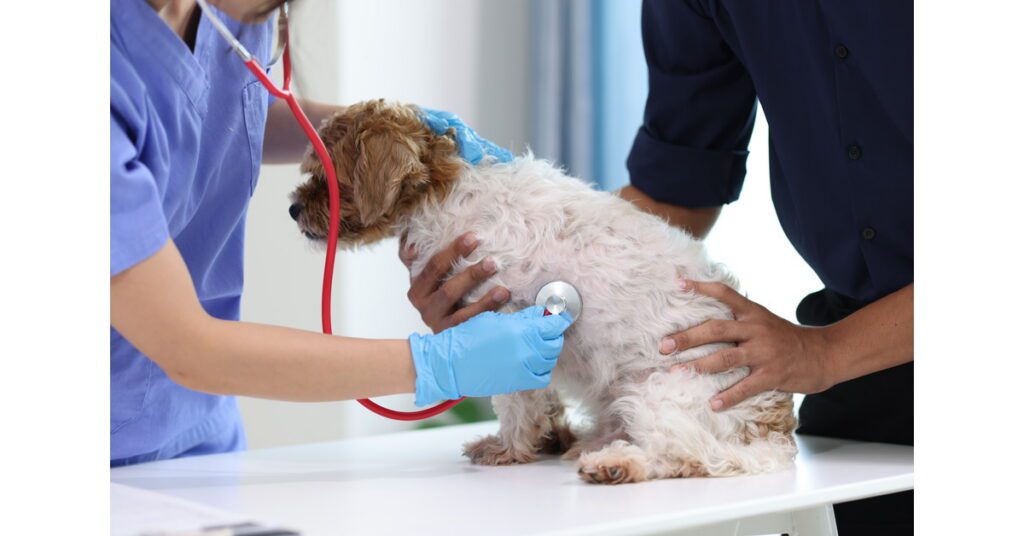
When a coughing dog arrives at University Veterinary Hospital, the diagnostic process begins with a detailed history and thorough physical examination. Your veterinarian will listen to the lungs and heart with a stethoscope, evaluate the throat and upper airways, and assess the dog’s overall condition.
Depending on what the exam reveals, additional diagnostics may include chest X-rays to evaluate the lungs and heart size, bloodwork to detect infection or organ dysfunction, or a tracheal wash or bronchoscopy for airway sampling. Treatment for a coughing dog depends entirely on what’s driving the cough: antibiotics for bacterial infections, bronchodilators or cough suppressants for airway disease, diuretics for fluid accumulation from heart failure, or surgical and medical management for structural issues like collapsing trachea.
Can Dog Coughing Be Prevented?
Some causes of coughing in dogs are preventable. Keeping your dog’s vaccinations current is one of the most effective strategies. The Bordetella vaccine helps protect against kennel cough, and the canine influenza vaccine offers protection against dog flu strains. Both are especially important for dogs that socialize regularly with other animals.
Annual wellness exams at University Veterinary Hospital allow the veterinary team to monitor heart and lung health over time, catching changes early before they become serious problems. For dogs prone to airway irritation, using a harness instead of a collar can reduce pressure on the trachea during walks.
What Your Coughing Dog Needs From You
A coughing dog is depending on you to pay attention and take action when needed. Most dogs can’t tell us when they’re uncomfortable. They just start showing it through symptoms like coughing, changes in activity level, or altered breathing patterns. By staying observant and getting timely veterinary care, you give your dog the best chance at a fast recovery and long-term health.
If your dog has been coughing and you’re not sure whether it’s something to be concerned about, our team at University Veterinary Hospital in Shreveport is ready to help. A quick examination can provide the clarity and peace of mind you and your dog both deserve. Call us at (318) 797-5522 or book an appointment online.
Recent Posts
About University Veterinary Hospital
UVH has a phenomenal team of veterinarians and specialists available to meet all your pet’s needs. From the moment you walk through our doors, you will be met with friendly faces and warm greetings from our wonderful front desk team, and then ushered into an exam room to meet with your veterinarian. We are deeply invested in your pet’s longevity and happiness, and in your satisfaction.