

A Pet Parent’s Guide To Understanding Glaucoma in Dogs
Glaucoma in dogs is a painful and potentially blinding eye condition that affects thousands of dogs every year. It develops when the fluid inside the eye cannot drain properly, causing pressure to build to damaging levels. Understanding glaucoma in dogs including what causes it, how it’s recognized, and how it’s treated is something every dog owner should know, especially those with breeds that are prone to the condition. This guide from University Veterinary Hospital in Shreveport, LA is designed to help you do exactly that.
What Is Glaucoma in Dogs?
Glaucoma in dogs refers to a group of eye conditions characterized by increased intraocular pressure (IOP), which is the pressure inside the eyeball. The eye is constantly producing a fluid called aqueous humor, which circulates and drains through a structure called the iridocorneal angle. When that drainage is impaired, pressure inside the eye rises, damaging the optic nerve and retina. Without prompt treatment, this damage can lead to permanent vision loss or even blindness.
Canine glaucoma is considered a veterinary emergency when it occurs suddenly. The window for preserving vision can be very short, in some cases, irreversible damage can occur within hours of the onset of high intraocular pressure.
Types of Glaucoma in Dogs
There are two primary forms of canine glaucoma, and understanding the distinction is important for knowing your dog’s risk level and the treatment approach that may be required.
Primary Glaucoma
Primary glaucoma in dogs is an inherited condition caused by a structural abnormality in the drainage angle of the eye. It is not related to any other eye disease. Several breeds are genetically predisposed, including Basset Hounds, Cocker Spaniels, Chow Chows, Shar-Peis, Siberian Huskies, and Jack Russell Terriers. If a dog develops primary glaucoma in one eye, there is a very high probability that the other eye will be affected over time, sometimes within months to a year or two.
Secondary Glaucoma
Secondary glaucoma in dogs develops as a result of another eye condition or injury. Common underlying causes include uveitis (inflammation inside the eye), lens luxation (when the lens shifts out of position), cataracts, tumors, or trauma. Managing the underlying cause is a key part of treating secondary canine glaucoma.
What Are the Signs of Glaucoma in Dogs?
Glaucoma in dogs is often more advanced by the time owners notice it at home, because dogs are remarkably good at compensating for visual changes. That said, there are signs worth watching for. Contact University Veterinary Hospital promptly if you notice any of the following in your dog:
- Redness of the white part of the eye (sclera)
- Cloudiness or haziness of the cornea (the clear front surface of the eye)
- A visibly enlarged eye (called buphthalmos in chronic cases)
- Squinting, blinking frequently, or holding one eye closed
- Pawing at the eye or rubbing the face
- Visible pain, including restlessness or reluctance to be touched near the face
- Reduced vision or bumping into objects
- Dilated pupil that doesn’t constrict normally in light
It’s important to note that dogs with chronic, slowly developing glaucoma may show few outward signs until vision loss is already significant. This is one reason why routine wellness exams that include eye evaluations are so valuable.
How Is Canine Glaucoma Diagnosed?
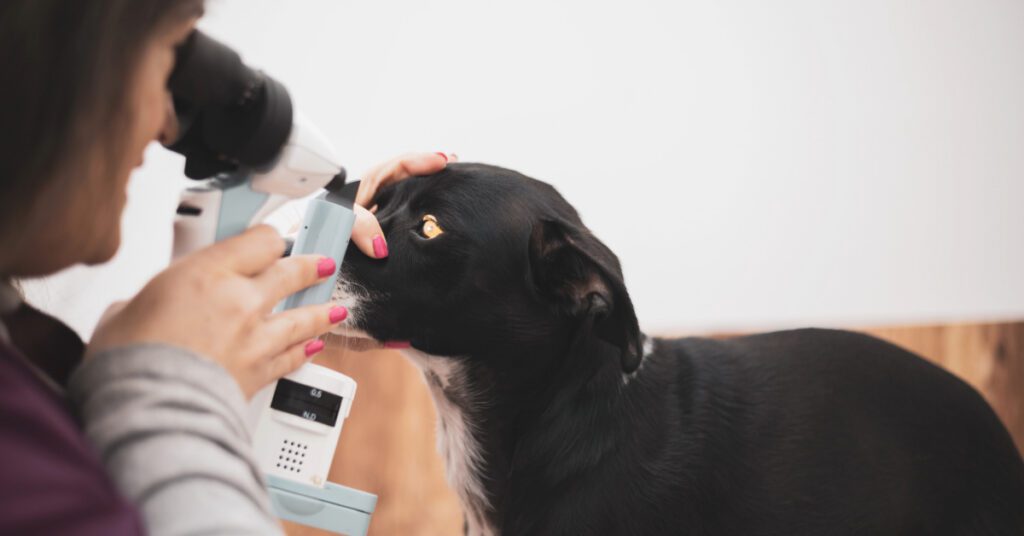
Diagnosing glaucoma in dogs requires measurement of the intraocular pressure using a device called a tonometer. This is a quick, non-invasive test that can be performed during a routine examination at University Veterinary Hospital. Normal intraocular pressure in dogs is generally between 10 and 25 mmHg. Readings above 30 mmHg are cause for concern, and those above 40 mmHg are considered an emergency.
In addition to tonometry, the diagnostic workup for suspected canine glaucoma may include a thorough ophthalmic exam to assess the drainage angle and internal structures of the eye, visual function testing, and in some cases, referral to a veterinary ophthalmologist for advanced evaluation.
How Is Glaucoma in Dogs Treated?
Treatment for glaucoma in dogs depends on several factors: whether the condition is primary or secondary, whether vision is still present, how severely the intraocular pressure is elevated, and whether both eyes are affected. The goal of treatment is to reduce intraocular pressure, preserve as much vision as possible, and control pain.
Medical Management
Prescription eye drops are typically the first approach to reducing intraocular pressure in dogs with glaucoma. Medications that reduce fluid production inside the eye or improve drainage are commonly used. Some dogs require multiple medications to keep pressure in a safe range. Oral medications or intravenous treatments may be used in acute, emergency situations to bring pressure down rapidly.
Surgical Options
When medical management alone isn’t sufficient to control intraocular pressure or if vision has already been lost, surgical options may be recommended. These include laser procedures to reduce fluid production, the implantation of a drainage device (gonioimplant), or removal of the eye (enucleation) in cases where the eye is painful and vision cannot be restored. While enucleation may sound alarming, dogs adapt remarkably well after the procedure and are typically far more comfortable afterward.
Preventive Treatment for the Unaffected Eye
In dogs with primary glaucoma in one eye, veterinarians often recommend starting prophylactic (preventive) treatment in the unaffected eye to delay the onset of glaucoma there. This is a proactive strategy that can extend the period of vision in the second eye by months to years.
Which Dog Breeds Are Most at Risk for Glaucoma?
Certain breeds carry a significantly higher risk of developing primary glaucoma in dogs due to inherited anatomical features of the eye’s drainage system. Knowing whether your dog is on this list is important for establishing an appropriate screening and monitoring plan with your veterinarian.
- Basset Hound
- American Cocker Spaniel and English Cocker Spaniel
- Chow Chow
- Siberian Husky
- Shar-Pei
- Jack Russell Terrier
- Norwegian Elkhound
- Bouvier des Flandres
- Samoyed
- Great Dane
If you own one of these breeds, talk to our veterinary team at University Veterinary Hospital about baseline eye pressure measurements and how frequently they should be repeated. Early detection is the most powerful tool available for protecting your dog’s vision.
Can Glaucoma in Dogs Be Prevented?
Primary canine glaucoma cannot be prevented because it is genetically inherited. However, the vision-robbing consequences of glaucoma can often be reduced or delayed through early detection and proactive management. For secondary glaucoma in dogs, managing underlying eye conditions like uveitis or lens luxation before they cause pressure changes is the best preventive strategy.
Regular eye examinations, particularly for at-risk breeds, are the cornerstone of glaucoma prevention and early intervention. Annual wellness visits at University Veterinary Hospital in Shreveport include assessment of your dog’s eyes, and our team can recommend a more tailored monitoring schedule based on your dog’s breed, age, and health history.
Life With a Dog That Has Glaucoma
A diagnosis of glaucoma in dogs is understandably upsetting for pet parents. But many dogs with glaucoma go on to live comfortable, happy lives with appropriate management. Dogs that lose vision in one eye typically adapt well and maintain a high quality of life. Even dogs that lose vision in both eyes can adjust to their environment with patience, consistency, and some simple modifications at home.
The most important thing you can do for a dog with glaucoma is stay consistent with monitoring and follow-up appointments. Intraocular pressure can change, and adjustments to medication or treatment plans may be needed over time. Our team at University Veterinary Hospital in Shreveport is here to be your partner throughout that process, providing the guidance and care your dog needs at every stage.
Protecting Your Dog’s Vision Starts With You
Glaucoma in dogs is a serious condition, but it doesn’t have to mean blindness or suffering. With timely diagnosis, appropriate treatment, and ongoing veterinary care, many dogs with canine glaucoma can maintain meaningful quality of life. If your dog is showing any signs of eye discomfort, or if you have a breed predisposed to glaucoma, call us at (318) 797-5522 or book an appointment online at University Veterinary Hospital in Shreveport, LA today. Early action is the greatest gift you can give your dog’s vision.
Recent Posts
About University Veterinary Hospital
UVH has a phenomenal team of veterinarians and specialists available to meet all your pet’s needs. From the moment you walk through our doors, you will be met with friendly faces and warm greetings from our wonderful front desk team, and then ushered into an exam room to meet with your veterinarian. We are deeply invested in your pet’s longevity and happiness, and in your satisfaction.